📖 The Restart Trap
📖 The Restart Trap
🗝️ Introduction
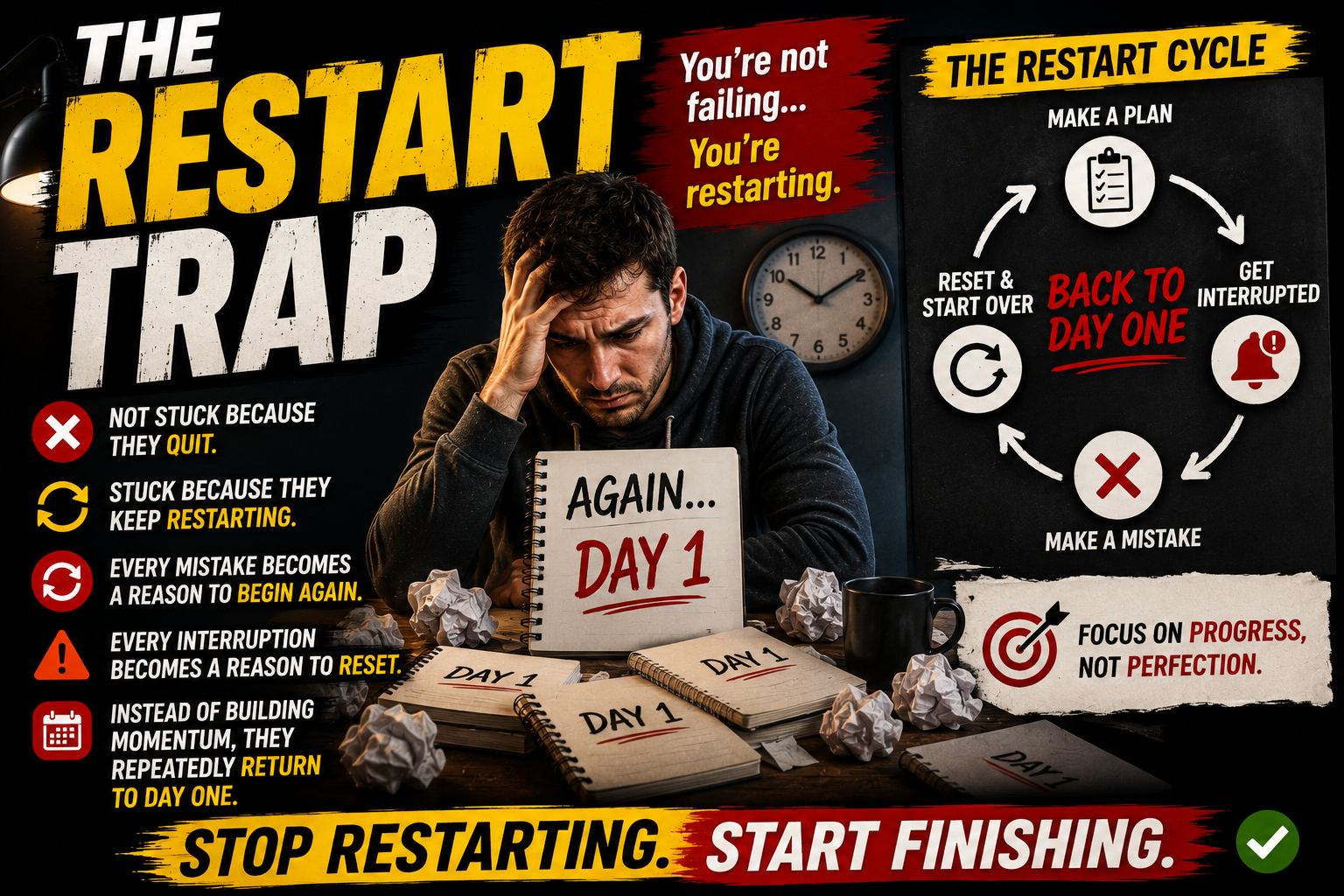
🔹 Many people are not stuck because they quit
🔹 They are stuck because they keep restarting
🔹 Every mistake becomes a reason to begin again
🔹 Every interruption becomes a reason to reset
🔹 Instead of building momentum, they repeatedly return to day one
🧩 Key Teaching Points
🔹 Progress comes from continuation
🔹 Restarting destroys momentum
🔹 Missing a day is normal
🔹 Missing a week is recoverable
🔹 Consistency is not perfection
🔹 The goal is to continue, not restart
💥 Why This Happens
🔹 Restarting feels clean
🔹 It creates the illusion of a fresh beginning
🔹 People often believe a perfect restart will fix previous mistakes
🔹 Starting is exciting
🔹 Continuing is less exciting but more effective
🧨 Embedded Belief
🔹 "I messed up, so I need to start over."
🔹 "I'll restart on Monday."
🔹 "This week is ruined."
🔹 "I'll begin properly next month."
💡 Real-Life Example
🔹 Someone follows a study plan for two weeks
🔹 They miss three days
🔹 Instead of continuing, they abandon the system
🔹 Two weeks later, they create a new plan
🔹 The cycle repeats again and again
❓ Why This Belief Exists
🔹 People confuse mistakes with failure
🔹 Fresh starts feel motivating
🔹 Perfection is often treated as the standard
🔹 Recovery skills are rarely taught
🔗 Interconnections
🔹 Often follows The All-or-Nothing Trap
🔹 Frequently combines with Tool Addiction
🔹 Common after Comparing Schedules
🔹 Weakens Continuity Systems
🔁 Replacement Rule
🔹 Replace restarting with recovering
🔹 Replace perfection with continuation
🔹 Replace day one with day two
🔹 Resume where you are
🔹 Don't erase progress because of interruptions
📋 Core Message
🔹 The people who succeed are not the people who never fall behind
🔹 They are the people who return quickly
💡 Simple Examples
🔹 Missing one workout and continuing the next day
🔹 Skipping a study session and returning immediately
🔹 Falling behind on a project and resuming instead of redesigning everything
🔹 Continuing a system after a bad week
📋 When to Use
🔹 After missing a habit
🔹 After losing momentum
🔹 After making mistakes
🔹 Whenever you feel tempted to "start over"
🧠 Simple Formula
🔹 Mistake + Recovery = Progress
🔹 Mistake + Restart = Delay
⚠️ Important
🔹 Recovery is a skill
🔹 Every long-term system experiences interruptions
🔹 The difference is how quickly you return
❌ What This Lesson Is NOT Saying
🔹 It is not saying mistakes don't matter
🔹 It is not saying habits maintain themselves
🔹 It is not saying planning is unnecessary
🔹 It is saying recovery matters more than perfection
⚠️ Common Misuse
🔹 Using recovery as an excuse for repeated neglect
🔹 Ignoring genuine system problems
🔹 Believing continuation means never making improvements
🔄 Recovery Rule
🔹 Never miss twice if possible
🔹 If you fall behind
🔹 Resume with the next opportunity
🔹 Do not wait for Monday
🔹 Do not wait for next month
🔹 Continue immediately
🔁 Internal Dialogue Shift
Before
🔹 "I ruined the plan."
🔹 "I need a fresh start."
🔹 "I'll restart next week."
After
🔹 "I had an interruption."
🔹 "I can continue today."
🔹 "Progress resumes now."
🎯 Outcome Check
🔹 Can you continue after a mistake?
🔹 Can you recover without creating a new system?
🔹 Can you avoid turning interruptions into restarts?
If yes, the lesson is working.
🧪 Micro-action
🔹 Think of one habit or goal you abandoned recently
🔹 Do not redesign it
🔹 Do not restart it
🔹 Take the next small step today
🧪 Solved Example (Step-by-Step)
🔹 Noor studies daily for three weeks
🔹 A busy week interrupts her routine
🔹 She feels tempted to create a new study plan
🔹 Instead, she opens her notes
🔹 She studies for 15 minutes
🔹 Momentum returns
🔹 No restart was needed
📋 What This Reveals
🔹 Most progress is lost during recovery failures
🔹 Restarting feels productive but often delays progress
🔹 Continuation is more powerful than fresh starts
🔹 Long-term success depends on returning, not perfection
🎯 One-Sentence Reflection
🔹 Progress belongs to those who continue, not those who repeatedly restart.
🏁 Conclusion
🔹 Every meaningful goal includes interruptions
🔹 Every system experiences imperfect days
🔹 The secret is not avoiding mistakes
🔹 The secret is reducing the time between interruption and recovery
🔹 Continue more often than you restart, and progress becomes inevitable.
4 comments