📖 Pomodoro: Helpful Tool or Hidden Trap?
📖 Pomodoro: Helpful Tool or Hidden Trap?
Important:
This lesson is a guardrail, not a recommendation.

🗝️ Introduction
🔹 Some tools look harmless
🔹 They promise structure and focus
🔹 They work well at first
🔹 This lesson explains when a tool starts causing pressure
🧩 Key Teaching Points
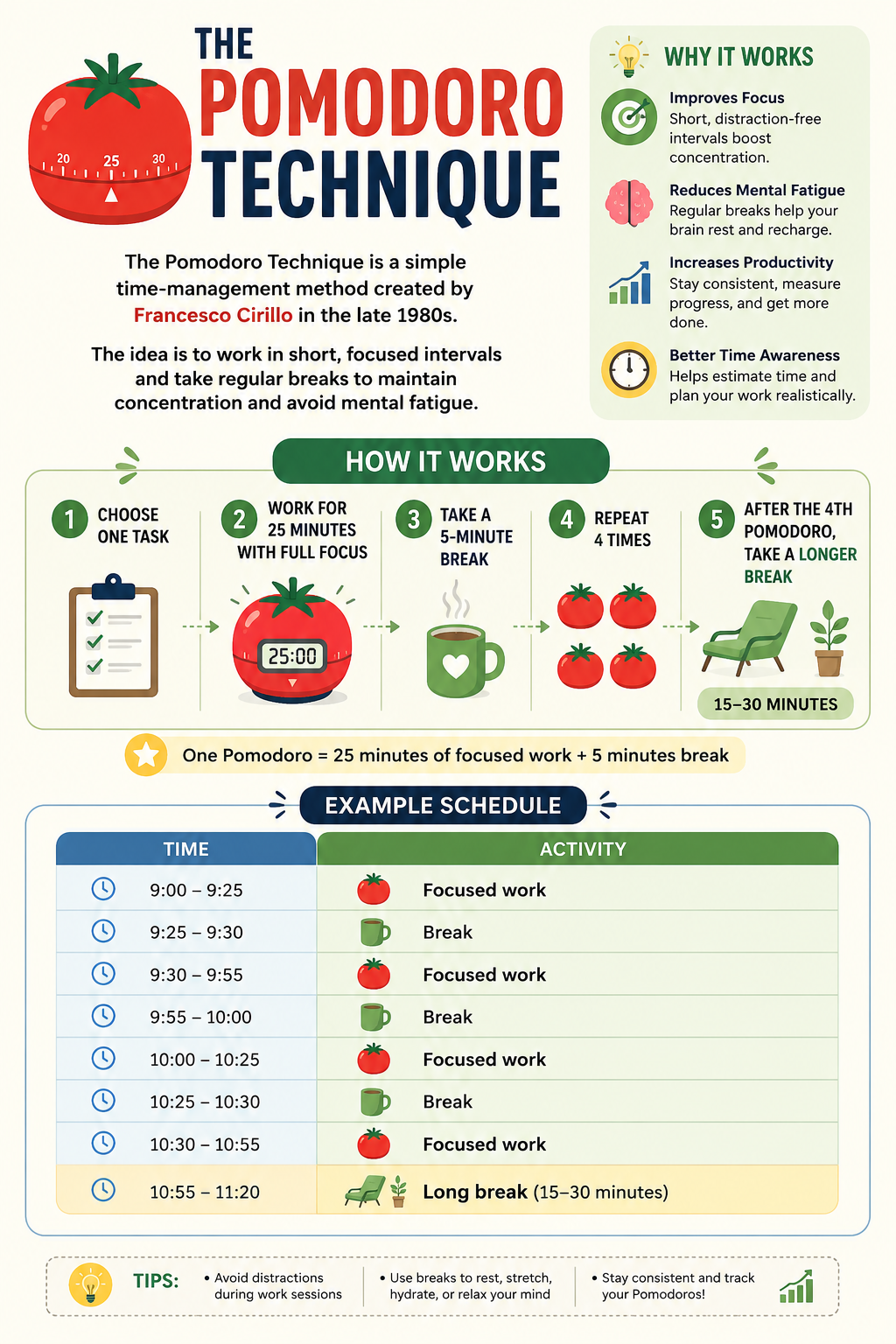
🧩 Pomodoro is a work–rest example ⏱️
🔹 A common version is 25 minutes work, 5 minutes rest , Repeat 4 times, then take long rest 15 to 20 minutes.
🔹 It helps beginners notice fatigue
🔹 It encourages taking breaks
🧩 Tools are optional, not mandatory 🧰
🔹 Pomodoro is one possible rhythm
🔹 It is not a productivity requirement
🧩 Rigid use recreates pressure ⚠️
🔹 Timers can become commands
🔹 Pressure quietly returns
🧨 Embedded belief
If a tool works for others, I must follow it exactly.
💡 Real-life example
🔹 You feel tired at minute 18
🔹 The timer says “keep going”
🔹 You push through anyway
🔹 Fatigue increases instead of recovery
❓ Why this belief exists
🔹 Tools feel objective and safe
🔹 Numbers feel reliable
🔹 Ignoring internal signals feels responsible
🔗 Interconnections
🔹 This lesson connects tools to pressure
🔹 It links recovery cycles to self-awareness
🔹 It protects the rest and recovery module
🔁 Replacement rule
Use tools to support awareness, not to override it.
📋 Core message
A tool should follow your energy — not replace it.
❌ What this lesson is NOT saying
🔹 It is not saying Pomodoro is bad
🔹 It is not saying timers should never be used
⚠️ Common misuse
🔹 Forcing yourself to finish the timer while exhausted
🔁 Internal dialogue shift
Before : “I must finish the timer.”
After : “What does my energy need right now?”
🎯 Outcome check
🔹 You feel permission to stop before exhaustion
🔹 You stop obeying the clock blindly
🧪 Micro-action (optional but recommended)
🧪 Example
🔹 Try one timed session
🔹 Stop early if energy drops
🎯 Your turn
🔹 Decide one tool rule you will treat as optional
🏁 Conclusion
🔹 Tools are helpers, not authorities
🔹 Awareness beats precision
🔹 Recovery matters more than timing
🔹 This lesson protects long-term sustainability
2 comments